Weather Alert in New Mexico
Red Flag Warning issued March 14 at 11:45AM MDT until March 15 at 8:00PM MDT by NWS Albuquerque NM
AREAS AFFECTED: Northwest Plateau; West Central Mountains; Middle Rio Grande Valley; West Central Basin and Range; North Central Mountains; Upper Rio Grande Valley and Lower Chama River Valley; Sangre de Cristo Mountains; Sandia and Manzano Mountains; East Central Plains
DESCRIPTION: ...RED FLAG WARNING TODAY FROM NOON UNTIL MIDNIGHT FOR THE NORTHEAST HIGHLANDS, NORTHEAST PLAINS, AND CENTRAL HIGHLANDS DUE TO STRONG WINDS AND LOW HUMIDITY... ...RED FLAG WARNING FROM 9 AM TO 8 PM SUNDAY FOR ALL OF NORTHERN AND CENTRAL NM DUE TO STRONG TO SEVERE WINDS AND LOW HUMIDITY... .Critical fire weather conditions will impact much of central and northern NM through Sunday. For today, westerly winds will linger longer across the central to northeast highlands and into the northeastern plains of New Mexico through late this evening. On Sunday, widespread critical fire weather will develop. Winds will turn very strong to potentially damaging as both a Pacific and backdoor cold front pass through the area. With gusts between 40 and 65 mph and single digit humidity values in many areas, critical to extreme fire weather conditions are likely despite cooling temperatures. The National Weather Service in Albuquerque has issued a Red Flag Warning...which is in effect from 9 AM to 8 PM MDT Sunday. The Fire Weather Watch is no longer in effect. * AREA AND TIMING...Northwest Plateau (Zone 101), West Central Mountains (Zone 105), Middle Rio Grande Valley (Zone 106), West Central Basin and Range (Zone 109), North Central Mountains (Zone 120), Upper Rio Grande Valley and Lower Chama River Valley (Zone 121), Sangre de Cristo Mountains (Zone 122), Sandia and Manzano Mountains (Zone 124), and East Central Plains (Zone 126) on Sunday from 9 AM through 8 PM. * 20 FOOT WINDS...North northwest winds 25 to 40 mph with gusts between 45 and 65 mph Sunday. * RELATIVE HUMIDITY...Minimum values between 6 and 15 percent with locally higher values across the peaks of the Tusas Mountains and Sangre de Cristo Mountains. * IMPACTS...Any fires that develop will likely spread rapidly. Outdoor burning is not recommended.
INSTRUCTION: Please advise the appropriate officials or fire crews in the field of this Red Flag Warning.
Want more detail? Get the Complete 7 Day and Night Detailed Forecast!
Current U.S. National Radar--Current
The Current National Weather Radar is shown below with a UTC Time (subtract 5 hours from UTC to get Eastern Time).

National Weather Forecast--Current
The Current National Weather Forecast and National Weather Map are shown below.

National Weather Forecast for Tomorrow
Tomorrow National Weather Forecast and Tomorrow National Weather Map are show below.

North America Water Vapor (Moisture)
This map shows recent moisture content over North America. Bright and colored areas show high moisture (ie, clouds); brown indicates very little moisture present; black indicates no moisture.

Weather Topic: What are Nimbostratus Clouds?
Home - Education - Cloud Types - Nimbostratus Clouds
 Next Topic: Precipitation
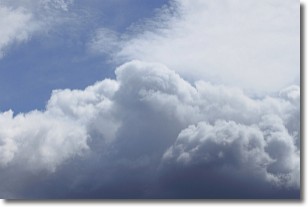
A nimbostratus cloud is similar to a stratus cloud in its formless,
smooth appearance. However, a nimbostratus cloud is darker than a stratus cloud,
because it is thicker.
Unlike a stratus cloud, a nimbostratus cloud typically brings with it the threat
of moderate to heavy precipitation. In some cases, the precipitation may evaporate
before reaching the ground, a phenomenon known as virga.
Next Topic: Precipitation
Weather Topic: What is Rain?
Home - Education - Precipitation - Rain
 Next Topic: Shelf Clouds
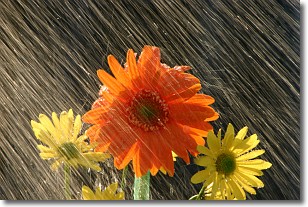
Precipitation in the form of water droplets is called rain.
Rain generally has a tendency to fall with less intensity over a greater period
of time, and when rainfall is more severe it is usually less sustained.
Rain is the most common form of precipitation and happens with greater frequency
depending on the season and regional influences. Cities have been shown to have
an observable effect on rainfall, due to an effect called the urban heat island.
Compared to upwind, monthly rainfall between twenty and forty miles downwind of
cities is 30% greater.
Next Topic: Shelf Clouds
Current conditions powered by WeatherAPI.com