Weather Alert in Washington
Winter Weather Advisory issued March 31 at 7:57PM PDT until April 2 at 11:00AM PDT by NWS Spokane WA
AREAS AFFECTED: Okanogan Highlands
DESCRIPTION: * WHAT...Snow expected Above 4000 feet. Total snow accumulations between 3 and 8 inches. * WHERE...Sherman Pass, Boulder Creek Road, Highway 20 Wauconda Summit, and Chesaw Road. * WHEN...From 5 AM Wednesday to 11 AM PDT Thursday. * IMPACTS...Plan on slippery road conditions. * ADDITIONAL DETAILS...Light snow is expected on Wednesday with areas of slick driving conditions in the morning over the mountain passes. Snow will increase Wednesday evening with winter travel conditions through the night into early Thursday.
INSTRUCTION: Slow down and use caution while traveling. For the latest travel information in Washington, go to https://wsdot.wa.gov/travel
Want more detail? Get the Complete 7 Day and Night Detailed Forecast!
Current U.S. National Radar--Current
The Current National Weather Radar is shown below with a UTC Time (subtract 5 hours from UTC to get Eastern Time).

National Weather Forecast--Current
The Current National Weather Forecast and National Weather Map are shown below.

National Weather Forecast for Tomorrow
Tomorrow National Weather Forecast and Tomorrow National Weather Map are show below.

North America Water Vapor (Moisture)
This map shows recent moisture content over North America. Bright and colored areas show high moisture (ie, clouds); brown indicates very little moisture present; black indicates no moisture.

Weather Topic: What are Nimbostratus Clouds?
Home - Education - Cloud Types - Nimbostratus Clouds
 Next Topic: Precipitation
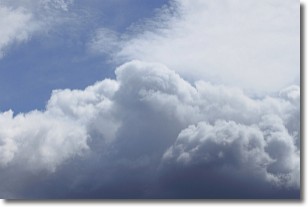
A nimbostratus cloud is similar to a stratus cloud in its formless,
smooth appearance. However, a nimbostratus cloud is darker than a stratus cloud,
because it is thicker.
Unlike a stratus cloud, a nimbostratus cloud typically brings with it the threat
of moderate to heavy precipitation. In some cases, the precipitation may evaporate
before reaching the ground, a phenomenon known as virga.
Next Topic: Precipitation
Weather Topic: What is Rain?
Home - Education - Precipitation - Rain
 Next Topic: Shelf Clouds
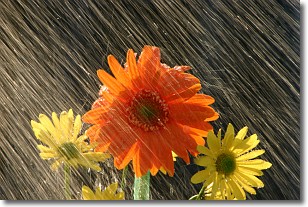
Precipitation in the form of water droplets is called rain.
Rain generally has a tendency to fall with less intensity over a greater period
of time, and when rainfall is more severe it is usually less sustained.
Rain is the most common form of precipitation and happens with greater frequency
depending on the season and regional influences. Cities have been shown to have
an observable effect on rainfall, due to an effect called the urban heat island.
Compared to upwind, monthly rainfall between twenty and forty miles downwind of
cities is 30% greater.
Next Topic: Shelf Clouds
Current conditions powered by WeatherAPI.com