Weather Alert in Indiana
Flood Warning issued March 5 at 11:07PM EST until March 15 at 10:00PM EDT by NWS Indianapolis IN
AREAS AFFECTED: Lawrence, IN; Martin, IN
DESCRIPTION: ...The Flood Warning is extended for the following rivers in Indiana... East Fork White River near Rivervale, and at Columbus. Flatrock River near Columbus. Driftwood River near Edinburgh. East Fork White River at Williams and near Bedford. ...The Flood Warning continues for the following rivers in Indiana... East Fork White River at Shoals and Seymour. .Total rainfall amounts of 3 to over 5 inches of rain across much of central and southern Indiana is bringing widespread flooding. Additional rainfall over the weekend and next week could lengthen the amount of time the river remains in flood. * WHAT...Moderate flooding is forecast. * WHERE...East Fork White River at Williams. * WHEN...From Friday afternoon to Sunday, March 15. * IMPACTS...At 14.9 feet, On April 24, 2011 extensive flooding in progress with SR 450 between Bedford and Shoals flooded in at least 3 locations. The deepest location was just east of Williams near the RR tressel. The next deepest was at Coxton Rd where backwater from the river extensively flooded Salt Creek. The last location was west of Williams near Dillman Rd where backwater from the river closed the road. To reach Williams one must use Ridge Road. Extensive flooding of many local river roads in Lawrence Co. * ADDITIONAL DETAILS... - At 9:15 AM EST Thursday the stage was 6.1 feet. - Forecast...The river is expected to rise above flood stage tomorrow afternoon to a crest of 15.1 feet early Monday afternoon. It will then fall below flood stage Sunday, March 15. - Flood stage is 8.0 feet. - http://www.weather.gov/safety/flood
INSTRUCTION: Be especially cautious at night when it is harder to recognize the dangers of flooding. Flooding is occurring or is imminent. Most flood related deaths occur in automobiles. Do not attempt to cross water covered bridges, dips, or low water crossings. Never try to cross a flowing stream, even a small one, on foot. To escape rising water find another route over higher ground. Additional information is available at www.weather.gov/ind. The next statement should be issued Friday afternoon by around 200 PM EST.
Want more detail? Get the Complete 7 Day and Night Detailed Forecast!
Current U.S. National Radar--Current
The Current National Weather Radar is shown below with a UTC Time (subtract 5 hours from UTC to get Eastern Time).

National Weather Forecast--Current
The Current National Weather Forecast and National Weather Map are shown below.

National Weather Forecast for Tomorrow
Tomorrow National Weather Forecast and Tomorrow National Weather Map are show below.

North America Water Vapor (Moisture)
This map shows recent moisture content over North America. Bright and colored areas show high moisture (ie, clouds); brown indicates very little moisture present; black indicates no moisture.

Weather Topic: What are Cirrostratus Clouds?
Home - Education - Cloud Types - Cirrostratus Clouds
 Next Topic: Cirrus Clouds
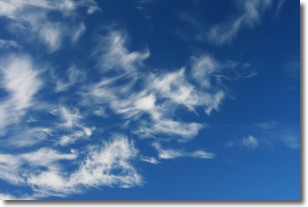
Cirrostratus clouds are high, thin clouds that form above
20,000 feet and are made mostly of ice crystals. They sometimes look like giant
feathers, horse tails, or curls of hair in the sky.
These clouds are pushed by the jet stream and can move at high speeds reaching
100 mph.
What do they indicate?
They indicate that a precipitation is likely within 24 hours.
Next Topic: Cirrus Clouds
Weather Topic: What is Condensation?
Home - Education - Precipitation - Condensation
 Next Topic: Contrails
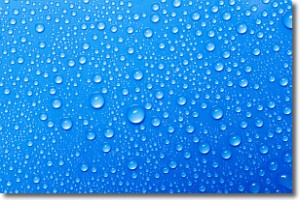
Condensation is the process which creates clouds, and therefore
it is a crucial process in the water cycle.
Condensation is the change of matter from a state of gas into a state of liquid,
and it happens because water molecules release heat into the atmosphere and
become organized into a more closely packed structure, what we might see as
water droplets.
Water is always present in the air around us as a vapor, but it's too small for
us to see. When water undergoes the process of condensation it becomes organized
into visible water droplets. You've probably seen condensation happen before on the
surface of a cold drink!
Next Topic: Contrails
Current conditions powered by WeatherAPI.com