Weather Alert in North Carolina
Special Weather Statement issued February 4 at 10:34PM EST by NWS Greenville-Spartanburg SC
AREAS AFFECTED: Avery; Alexander; Iredell; Davie; Madison; Yancey; Mitchell; Haywood; Buncombe; Catawba; Rowan; Transylvania; Henderson; Cleveland; Lincoln; Gaston; Mecklenburg; Cabarrus; Union; Caldwell Mountains; Greater Caldwell; Burke Mountains; Greater Burke; McDowell Mountains; Eastern McDowell; Rutherford Mountains; Greater Rutherford; Polk Mountains; Eastern Polk; Cherokee; York; Pickens Mountains; Greenville Mountains; Central Greenville; Northern Spartanburg; Southern Spartanburg
DESCRIPTION: Snow showers are developing along the Escarpment and are expected to generally drift east into the Piedmont from late evening through the overnight. Snow showers are possible roughly along a line from Greenville to Spartanburg to York and areas north and east. Most locations should only see a trace on mainly grassy and elevated surface. But localized accumulations of up to an inch are possible in the heavier showers. There is also still melting snow from last weekend's storm across portions of the North Carolina Foothills and Piedmont that may refreeze by daybreak Thursday and produce black ice. Be prepared for slick spots, especially on bridges and overpasses and any untreated roadways. Use extra caution when walking on sidewalks, driveways, and in parking lots.
INSTRUCTION: N/A
Want more detail? Get the Complete 7 Day and Night Detailed Forecast!
Current U.S. National Radar--Current
The Current National Weather Radar is shown below with a UTC Time (subtract 5 hours from UTC to get Eastern Time).

National Weather Forecast--Current
The Current National Weather Forecast and National Weather Map are shown below.

National Weather Forecast for Tomorrow
Tomorrow National Weather Forecast and Tomorrow National Weather Map are show below.

North America Water Vapor (Moisture)
This map shows recent moisture content over North America. Bright and colored areas show high moisture (ie, clouds); brown indicates very little moisture present; black indicates no moisture.

Weather Topic: What is Sleet?
Home - Education - Precipitation - Sleet
 Next Topic: Snow
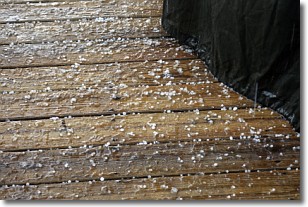
Sleet is a form of precipitation in which small ice pellets are the primary
components. These ice pellets are smaller and more translucent than hailstones,
and harder than graupel. Sleet is caused by specific atmospheric conditions and
therefore typically doesn't last for extended periods of time.
The condition which leads to sleet formation requires a warmer body of air to be
wedged in between two sub-freezing bodies of air. When snow falls through a warmer
layer of air it melts, and as it falls through the next sub-freezing body of air
it freezes again, forming ice pellets known as sleet. In some cases, water
droplets don't have time to freeze before reaching the surface and the result is
freezing rain.
Next Topic: Snow
Weather Topic: What are Stratocumulus Clouds?
Home - Education - Cloud Types - Stratocumulus Clouds
 Next Topic: Stratus Clouds
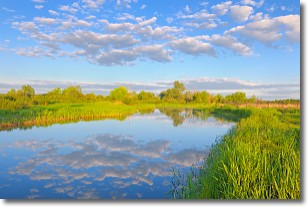
Stratocumulus clouds are similar to altocumulus clouds in their
fluffy appearance, but have a slightly darker shade due to their additional mass.
A good way to distinguish the two cloud types is to hold your hand out and measure
the size of an individual cloud; if it is the size of your thumb it is generally
an altocumulus cloud, if it is the size of your hand it is generally a
stratocumulus cloud.
It is uncommon for stratocumulus clouds to produce precipitation, but if they do
it is usually a light rain or snow.
Next Topic: Stratus Clouds
Current conditions powered by WeatherAPI.com